






Shopping Cart
(0)

The anchor cross is one of the oldest Christian symbols in existence. It fuses the shape of a cross with the form of a nautical anchor to communicate hope, steadfastness, and salvation in Jesus Christ. Long before the plain Latin cross became the universal mark of Christianity, early Christians relied on the anchor cross to quietly identify their faith, encode their beliefs during times of persecution, and remind one another of the eternal promise in scripture.
What Is the Anchor Cross and What Does It Look Like?
How the Cross and Anchor Combine
The anchor cross is formed by overlapping a traditional cross with the shape of a ship's anchor. The lower vertical arm extends downward like the shank of an anchor, while two curved flukes sweep outward at the base, mimicking the ring and stock found on a nautical anchor. The crossbar of the anchor doubles as the horizontal arm of the cross, making the two forms almost inseparable when viewed together.
This visual integration is not accidental. It reflects the theological truth that Christ and hope are inseparable realities for the believer. The symbol is also known as the anchored cross, the mariner's cross, or the Cross of Hope.
Variations Across Traditions
The Cross of Camargue
A striking variation found in the Camargue region of southern France, the Cross of Camargue combines the anchor cross with a heart and a Camargue trident cross to represent faith, hope, and love together. It functions as both a religious symbol and a cultural emblem of the region.
The Cross Anchory
Used in heraldry, the cross anchory features stylized anchor flukes at the end of each arm of the cross. It appeared on coats of arms, city seals, and church emblems across medieval Europe, carrying the anchor cross tradition into formal institutional design.
Cross Comparison: Anchor Cross vs. Other Christian Crosses
| Cross Type | Shape | Primary Meaning | Era of Origin |
| Anchor Cross | Cross merged with anchor flukes | Hope and salvation | 1st century AD |
| Latin Cross | Simple vertical + horizontal bar | Crucifixion of Christ | 4th century AD |
| Greek Cross | Equal-length arms | The four gospels | Early church |
| Celtic Cross | Cross with circle at intersection | Eternity / Celtic faith | 5th-6th century AD |
| Cross of Camargue | Anchor cross + heart + trident | Faith, hope, and love | Medieval France |
| Read more on The Complete Guide to Christian Crosses. |
What Is the Origin of the Anchor Cross in Early Christianity?
Christians Under Roman Rule
The anchor cross is one of the oldest Christian symbols, with origins traceable to the earliest centuries of the church. Christians living under Roman rule in the first and second centuries AD could not openly display a cross without risking persecution, arrest, or execution.
The anchor, however, was a familiar object of everyday life in the Roman world, associated with safety and refuge at sea. By disguising the cross within the outline of an anchor, early Christians could identify themselves to one another, mark their tombs, and decorate personal objects while avoiding the attention of Roman authorities.
Why the Anchor Was the Right Choice
Practical invisibility. An anchor was a common sight in any port city or trading community across the Roman Empire. Unlike a cross, which soldiers and officials would immediately recognize as a marker of the outlawed Christian faith, an anchor raised no suspicion.
Scriptural resonance. The anchor was already a powerful image in early Christian teaching, rooted directly in the letter to the Hebrews. Choosing it as the disguised cross was not just clever camouflage; it was theologically intentional.
Shared visual language. Fish, doves, ships, and anchors formed a coherent visual vocabulary for early believers. The anchor cross sat naturally within this family of symbols and could be read as part of the same faith story.
| Related article on The Ichthys: History and Meaning of the Jesus Fish Symbol The fish symbol and the anchor cross were used together in early Christian catacombs. |
Evidence from the Catacombs
Inscriptions and carvings featuring the anchor cross have been found in the Catacombs of St. Domitilla in Rome, one of the oldest and most significant early Christian burial sites, dating to the late first and early second century AD.
These catacombs contain epitaphs in which the anchor appears alongside fish, doves, and the Chi-Rho. Every symbol carved into a catacomb wall was a theological statement about the faith of the deceased and the hope of those who mourned them. The anchor cross appears most frequently in the oldest sections, suggesting it predates the plain Latin cross as the primary marker of Christian burial.
What Does the Bible Say About the Anchor as a Symbol of Hope?
The Key Verse in Hebrews
"We have this hope as an anchor for the soul, sure and steadfast, and entering into that within the veil." Hebrews 6:19 (KJV)
Read the full passage in context at Bible Gateway (Hebrews 6:19, KJV).
The phrase "within the veil" refers to the inner sanctuary of the temple, the Holy of Holies, into which only the high priest could enter. For Christians, this represents the very presence of God. The verse declares that the hope of salvation, grounded in God's promises and secured by Jesus Christ as our great High Priest, is as firm and unshakeable as an anchor thrown from a ship into bedrock below.
This is why the anchor cross became the cross symbol of hope in the early church. The anchor of the soul was more than metaphor. It was a declaration that faith in Jesus Christ provides a refuge, a stability, and a hope of salvation that no storm of persecution, suffering, or death can uproot.
Hope Set Before Us
In Hebrews 6:18, the author urges believers to hold fast to the "hope set before us." This phrase is the direct precursor to the anchor metaphor in the very next verse, making the anchor cross a visual summary of the entire passage.
For early Christians who may not have been literate, seeing an anchor carved into a tomb or worn around a neck communicated volumes of scriptural truth in a single glance.
What Saint Ambrose Said
Saint Ambrose, the fourth-century bishop of Milan, described faith as the anchor of the soul in his writings, strengthened by hope in the promises of Christ. This confirms that the anchor was not merely a practical disguise but a deeply spiritual image that theologians and ordinary believers alike found genuinely meaningful.
Who Was Clement of Alexandria and Why Does He Matter?
Who Was Clement of Alexandria?Clement of Alexandria (c. 150-215 AD) was a theologian and head of the Catechetical School of Alexandria, one of the most important centers of Christian learning in the ancient world. He was one of the first Christian writers to directly address the everyday life and material culture of believers.
His Recommendation of the Anchor
Clement of Alexandria was the first Christian writer to explicitly recommend the anchor as an appropriate symbol for believers. In his work Paedagogus ("The Instructor"), Clement advised Christians on which images were suitable to engrave on their signet rings, the personal seals used to mark documents and correspondence.
He listed the anchor, the fish, the ship, the dove, and a fisherman among the appropriate symbols, while discouraging images associated with pagan religion. Read the full Catholic Encyclopedia entry on Clement of Alexandria.
Why This Recommendation Mattered
In an era when Christianity was still illegal under Roman law, the choice of personal symbols was a matter of both identity and safety. Clement was giving his congregation a list of symbols that would allow them to identify themselves to fellow Christians without alerting Roman authorities.
The anchor, as a symbol common to anyone living near the sea or involved in trade, was the ideal choice: visible to the faithful, invisible as a Christian symbol to those who were looking to persecute the church.
Clement of Rome: A Second Witness
St. Clement of Rome: Patron Saint of SailorsClement of Rome is venerated in Catholic and Orthodox tradition as a patron saint of sailors, mariners, and those who work at sea. His feast day is November 23. According to church tradition, he was martyred by being tied to an anchor and cast from a ship by order of the Roman emperor, cementing the anchor as his defining symbol.
Clement of Rome also used anchor imagery in his writings to encourage believers facing trials. Read more about Clement of Rome at the Catholic Encyclopedia. The fact that two figures named Clement both referenced the anchor within the same era speaks to how widespread this symbol was in the earliest generations of Christianity.
How the Forms Overlap
The shank of the anchor forms the vertical arm of the cross. he stock (cross-bar) of the anchor forms the horizontal arm.
The flukes at the base curve outward in a way that echoes the foot of certain ornamental crosses.
This natural structural overlap meant that no artistic license was required to make the disguise work. An anchor simply drawn as an anchor was, for those with eyes to see, already an anchor cross.
Related Heraldic Variations
The cross bottony features trefoil-tipped arms that can resemble the flukes of an anchor. The cross anchory in heraldry places anchor-shaped terminals at the end of each arm of the cross. Both variations carried the anchor cross tradition into the medieval period and beyond, appearing in the coats of arms and ecclesiastical seals of European institutions.
What Is the Meaning of the Mariner's Cross in Catholic and Protestant Traditions?
The Catholic Tradition
The mariner's cross is the name most commonly used for the anchor cross in Catholic maritime tradition. It is associated with St. Clement of Rome, who according to tradition was tied to an anchor and thrown from a ship as an act of martyrdom by a Roman emperor.
Whether or not this account of his execution is historically accurate, it cemented the anchor as the defining symbol of St. Clement and made the mariner's cross a symbol of both faithful witness and sacrificial death for Christ. The symbol is used in Catholic devotional art, church decoration, and memorial contexts for those lost at sea.
The Protestant Tradition
In Protestant contexts, the mariner's cross appears in church architecture, hymnody, and personal jewelry as a symbol of hope and love for those who navigate the uncertain waters of life. Its appeal crosses denominational boundaries because the scriptural foundation in Hebrews is shared by all Christians who read the same Bible and trust the same Lord.
The United Methodist Church has incorporated an anchor-adjacent cross into its official emblem, combining a cross and flame to represent the church's missionary calling. The tradition of the anchored cross, born in the Roman catacombs, lives on across the full breadth of global Christianity.
How Is the Anchor Cross Used in Modern Faith and Fashion?
A Revival in Personal Faith
Today the anchor cross has experienced a significant revival as a symbol of personal faith expressed through jewelry, apparel, and home decor. Anchor cross necklaces, bracelets, and pendants are among the most popular Christian jewelry items sold globally, appealing to believers who want a symbol that is both visually striking and deeply rooted in scripture and church history.
Faith Fashion and the Anchor Cross
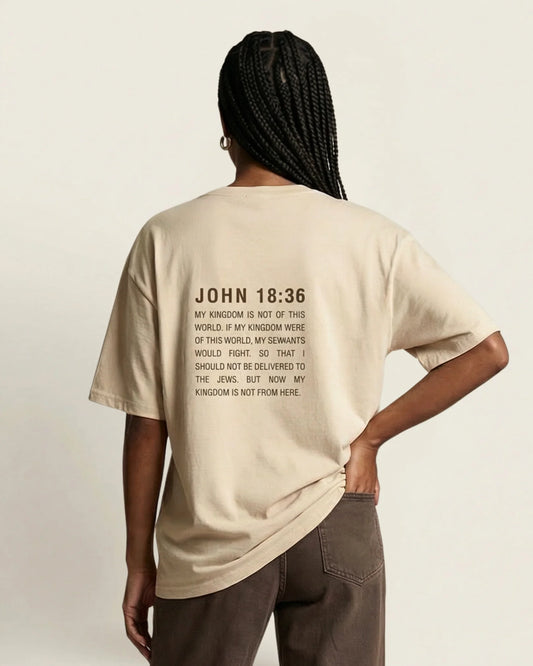
Faith-based apparel brands have embraced the anchor cross as a design element that communicates Christian identity without the sometimes polarizing directness of a plain cross or a Scripture reference. A hoodie or t-shirt bearing the anchor cross can start conversations about faith in contexts where explicitly religious language might not.
The anchor cross functions in modern Christian fashion much as it functioned in the Roman catacombs: as a symbol that speaks clearly to those who know its meaning while inviting curiosity from those who do not. It is a symbol that is anchored in faith but open to the world.
What Wearing an Anchor Cross Communicates
Choosing to wear an anchor cross is a statement that connects you to nearly two thousand years of Christian witness. When you wear this symbol, you participate in a tradition that stretches from the early Christians who carved anchors into the walls of the Roman catacombs, to medieval craftsmen who hammered them into heraldic shields, to the modern believers who wear anchor cross jewelry as a daily declaration of hope.
"We have this hope as an anchor for the soul." Hebrews 6:19
Every time you see the cross-shaped anchor, you are invited to recall that the hope of the gospel is a sure and steadfast anchor of the soul. In a world that generates anxiety, uncertainty, and storms of every kind, the anchor cross is a visible reminder that the faithful are not adrift. They are held.
Frequently Asked Questions About the Anchor Cross
What does the anchor cross mean in Christianity?
The anchor cross is a Christian symbol representing hope, faith, and salvation. Based on Hebrews 6:19, it describes hope in Christ as a sure and steadfast anchor of the soul. The symbol combines the shape of a nautical anchor with the form of a cross to communicate that Jesus Christ is the unshakeable foundation of the believer's hope, both in this life and in eternity.
How old is the anchor cross as a Christian symbol?
The anchor cross is one of the oldest Christian symbols, with examples dating to the late first and early second century AD. Anchor cross carvings have been found in the Catacombs of St. Domitilla in Rome, dating from around 95 AD onward, making the anchor cross potentially older than the widespread use of the plain Latin cross as a Christian emblem.
What is the difference between the anchor cross and the mariner's cross?
The anchor cross and the mariner's cross refer to the same symbol. The name mariner's cross emphasizes the nautical dimension of the symbol and its association with St. Clement of Rome, patron saint of sailors, who according to tradition was martyred by being tied to an anchor and cast from a ship. Both names describe a cross formed by overlapping a Christian cross with the shape of a ship's anchor.
What Bible verse is the anchor cross based on?
The primary biblical basis for the anchor cross is Hebrews 6:19: "We have this hope as an anchor for the soul, sure and steadfast, and entering into that within the veil" (KJV). This verse describes the Christian hope of salvation as an anchor that holds the soul securely in the presence of God. The anchor cross is a visual representation of this verse.
Is the anchor cross a Catholic symbol?
The anchor cross has deep roots in Catholic tradition, particularly through its association with St. Clement of Rome and its appearance in the Roman catacombs. However, it is not exclusively Catholic. The anchor cross is used across Catholic, Orthodox, and Protestant Christianity. Its biblical foundation in Hebrews makes it a genuinely ecumenical Christian symbol.
Key Things to Remember About the Anchor Cross
- Oldest Christian symbol: The anchor cross dates to the late first century AD, predating widespread use of the plain Latin cross.
- Biblical foundation: Hebrews 6:19 calls hope in Christ "a sure and steadfast anchor of the soul" -- the direct scriptural basis for the symbol.
- Hidden in plain sight: Early Christians used the anchor cross as a disguised cross during Roman persecution, when openly displaying a cross was dangerous.
- Endorsed by Clement: Clement of Alexandria explicitly recommended the anchor as a suitable Christian symbol in the second century AD.
- Martyrdom connection: St. Clement of Rome, patron saint of sailors, was reportedly tied to an anchor and thrown from a ship as an act of martyrdom.
- Multiple variations: The Cross of Camargue, the cross anchory, and the United Methodist cross all trace roots to the anchor cross tradition.
- Mariner's cross: Another name for the anchor cross, emphasizing its connection to seafaring and St. Clement of Rome.
- Catacombs evidence: The Catacombs of St. Domitilla in Rome contain some of the earliest known anchor cross inscriptions and epitaphs.
- Modern revival: The anchor cross is widely used today in Christian jewelry, faith apparel, and home decor as a symbol of personal hope.
- Universal appeal: Used across Catholic, Orthodox, and Protestant traditions, the anchor cross is one of the most ecumenical of all Christian symbols.